

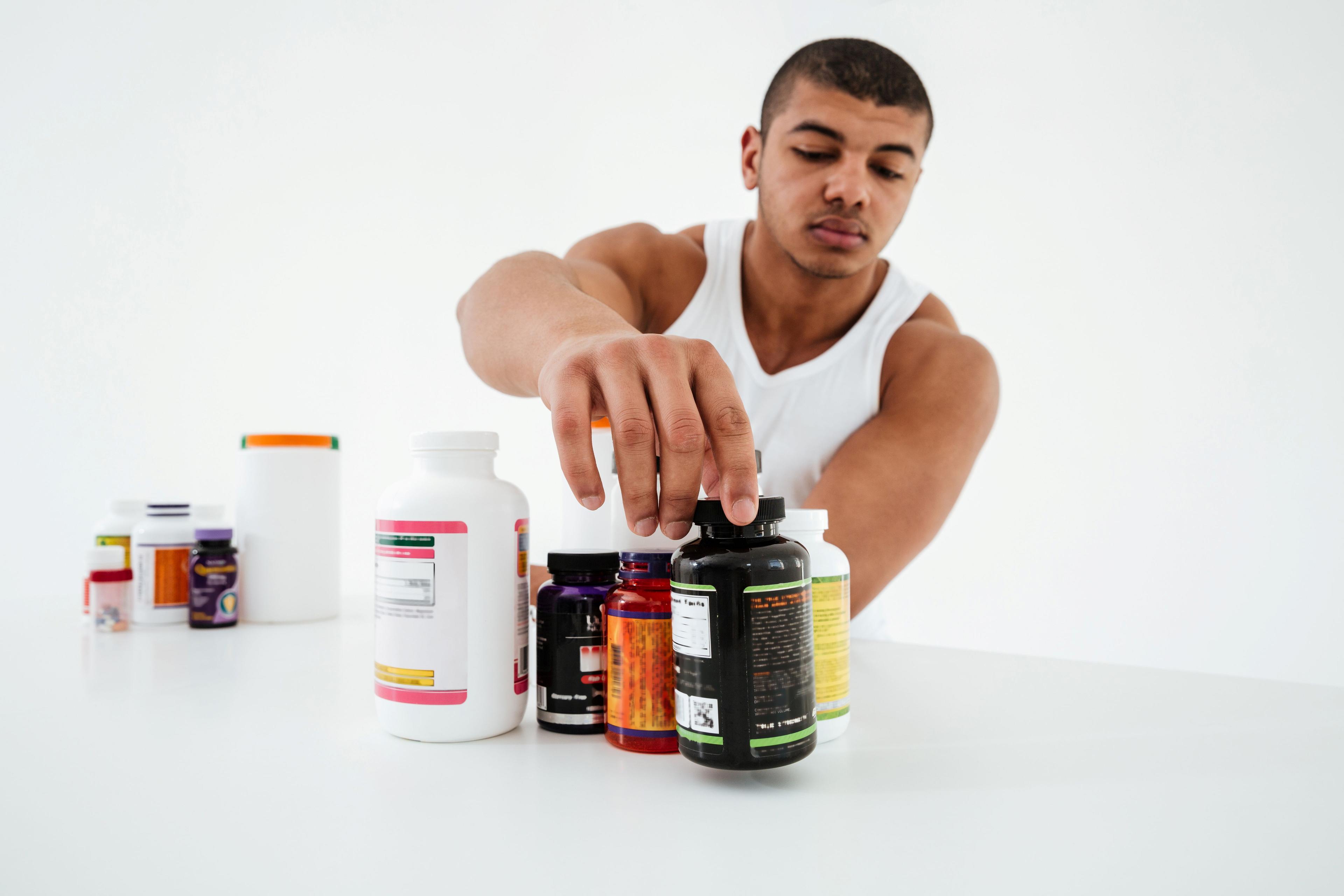
Indians now spend huge amounts on gym and health supplements, but many of these products add cost, not real results. If you eat well, train, and sleep, most popular powders do almost nothing extra for your muscle, fat loss, or skin, and most of these are overhyped ones.
The supplement boom in India.
Urban Indians increasingly treat supplements like daily necessities. Market reports estimate that the Indian dietary supplements industry is already worth well over ₹1 lakh crore and is growing fast, driven by vitamins, protein powders, and “performance” products sold online and in pharmacies. At the same time, national surveys show real nutrient problems such as vitamin D deficiency and anaemia, but also heavy self‑prescription guided by influencers and gym trainers instead of doctors. This mix of genuine needs and aggressive marketing makes it harder to know which supplements help and which ones mostly burn money.
This blog looks at seven popular supplements that are heavily marketed in India but usually do far less than promised for healthy adults.
1.BCAAs: Expensive Flavoured Water.
BCAAs (branched-chain amino acids) are the most overhyped supplement. It is a mix of leucine, isoleucine, and valine, sold as intra-workout drinks for muscle gain and recovery. They are popular in Indian gyms because they “sound” scientific and are easy to sip during workouts. Studies are clear that Muscle protein synthesis requires all essential amino acids, not just three; leucine can turn the signal on, but if the other essential amino acids are missing, muscle building cannot continue.
Researchers have compared BCAAs to whole protein, like whey or mixed dietary protein, while keeping total protein intake the same. Whole protein produces a stronger and longer anabolic response, while the body often oxidises isolated BCAAs for energy instead of using them to build new muscle. In these trials, BCAA supplements do not improve net muscle protein balance, muscle mass, or strength when people already eat enough protein from food or protein powders.
Research is clear that if you get sufficient protein from dal, dairy, paneer, eggs, meat, or a quality protein powder, BCAAs do not add meaningful extra muscle or reduce soreness. They mainly give you a sweet drink and a smaller bank balance. If your protein intake is low, it makes far more sense to fix your total daily protein instead of relying on three isolated amino acids.
2. Glutamine: Useful in hospitals, not in your shaker.
Glutamine is the most abundant amino acid in the body, involved in nitrogen transport, immune function, and gut health, which is why it is marketed as a recovery and immunity supplement. In healthy adults, glutamine is considered a non-essential amino acid because the body can synthesise enough of it, mainly from skeletal muscle, under normal conditions. Routine resistance training does not deplete glutamine to dangerously low levels, and temporary drops after intense exercise are quickly corrected by normal metabolism and dietary protein. The studies regarding the restoration of muscle function and the reduction of soreness are still scarce
Randomised trials in healthy, resistance-trained individuals show that glutamine supplementation does not improve muscle mass, strength, or recovery when calorie and protein intake are adequate. It does not meaningfully enhance muscle protein synthesis or reduce muscle breakdown compared with a normal high-protein diet. Where glutamine does have a role is in clinical settings such as trauma, burns, major surgery, or severe illness, where demands can exceed the body’s ability to produce it.
For the typical Indian gym‑goer or office worker, what actually supports recovery and immunity is sufficient calories, adequate protein, fruits and vegetables, and regular sleep, not scoops of glutamine. In this context, glutamine is not dangerous; it is simply redundant, hence it makes into this list of overhyped supplements.
3. Testosterone boosters: Big promises, tiny effects.
“Test boosters” are sold as natural ways to increase testosterone using herbs like tribulus terrestris, fenugreek, ashwagandha, plus minerals like zinc or magnesium. The marketing links them to muscle gain, fat loss, and better performance. In controlled studies on healthy men with normal baseline testosterone, however, these ingredients do not produce a meaningful or sustained rise in testosterone. Small changes that appear in some trials usually fall within normal day‑to‑day hormonal variation and do not translate into greater muscle mass or strength. A systematic review of all data published in the last two decades on testosterone boosters indicated that most fail to increase total testosterone, hence an overhyped supplement.
Testosterone production is tightly controlled by the Hypothalamic-Pituitary-Gonadal Axis, which responds primarily to sleep duration, calorie balance, training load, and stress. Chronic sleep deprivation, severe dieting, and excessive training can suppress testosterone, and no herbal capsule can override these basic regulatory systems. In cases of true clinical deficiency or specific micronutrient deficiencies, treatment must be guided by blood tests and medical supervision, not generic over‑the‑counter blends.
Research is clear that for most men, especially younger lifters, the real “test booster” is progressive resistance training, enough calories, adequate dietary fat, and a consistent sleep schedule. Over‑the‑counter boosters rarely change hormone levels in a way that matters for body composition, but they can create a false sense of security and sometimes contain undeclared substances.
4. Fat burners: Stimulants in disguise.
Fat burners are over-the-top, overhyped supplements marketed as products that speed up fat loss by raising metabolism, increasing fat oxidation, or suppressing appetite. Most formulas rely heavily on stimulants like caffeine, synephrine, or similar compounds. These ingredients can raise heart rate and nervous system activity, and they may temporarily reduce appetite and increase perceived energy. However, when calorie intake is controlled, studies consistently show no significant difference in actual fat loss between people who take stimulant fat burners and those who do not.
Once the supplement is stopped, appetite typically returns to baseline or higher, energy drops, and weight often rebounds if eating habits have not changed. Common side effects include anxiety, sleep disruption, palpitations, and digestive discomfort. Studies have shown that some ingredients in fat burners are associated with severe hepatotoxicity. Fat burners do not improve long-term metabolic health or body composition independent of a sustained calorie deficit.
Sustainable fat loss still depends on eating fewer calories than you burn over time, getting enough protein to protect muscle, and increasing daily movement such as walking and structured exercise. Fat burners may make dieting feel easier for a short period for some people, but they are not a magic shortcut and can encourage people to ignore the fundamentals.
5. Collagen powders: Overhyped and poor value for skin.
Collagen is heavily sold in India as a beauty shortcut for glowing, “anti‑ageing” skin, often with before-and-after photos and celebrity endorsements. What the research actually shows is far less impressive. A 2023 systematic review and meta‑analysis of 26 randomised trials found that hydrolysed collagen produced small, short‑term improvements in skin hydration and elasticity compared to placebo, measured over about 8-12 weeks. Another meta‑analysis reported statistically significant changes in hydration and elasticity, but again, the absolute effects were modest and based on short durations and small samples.
A 2025 meta‑analysis of 23 RCTs reported that when only higher‑quality, non‑industry‑funded studies were analysed, collagen supplements showed no meaningful benefit for hydration, elasticity, or wrinkles; the positive effects came mainly from lower‑quality, company‑sponsored trials. In other words, much of the “glow” may be coming from biased study design and funding rather than a powerful biological effect, thus making it into the list of overhyped supplements.
For healthy people, eating enough protein, collagen also offers no unique advantage over simply getting protein from foods like milk, curd, paneer, eggs, lentils, or whey, which support both skin and overall tissue repair esp when coupled with Vit C. The changes seen in trials are small, require daily use for weeks, and often disappear when the supplement is stopped. When you factor in cost, marketing hype, and the dependence on company‑funded data, collagen becomes a poor‑value choice for skin health in the real world.
6. L‑carnitine: Not a fat‑loss shortcut.
L‑carnitine helps transport long‑chain fatty acids into mitochondria, where they can be oxidised for energy, so it is widely marketed as a fat‑burning supplement. In healthy individuals with balanced diets, carnitine is not usually the limiting factor for fat loss; the body can synthesise it, and typical Indian diets that include meat or dairy already provide some. When calorie intake is matched, meta analysis in adults generally show no significant difference in fat loss between those supplementing with L‑carnitine and those who are not.
Supplementation appears beneficial mainly in contexts such as documented carnitine deficiency, certain metabolic disorders, or some older populations where carnitine status is impaired. Studies are clear, adding L‑carnitine does not increase fat oxidation to a degree that leads to visible fat loss on its own. Energy balance, the relationship between calories in and calories out, remains the key determinant.
If your goal is fat loss, consistent training, daily activity (like steps), and a calorie intake you can stick to long term matter far more than carnitine capsules. L‑carnitine is not harmful for most people at typical doses, but in the absence of a specific medical indication, it is simply unnecessary and hence an overhyped supplement for fatloss.
7. Beta‑alanine: Narrow benefits, broad marketing.
Beta‑alanine is an amino acid that raises muscle carnosine levels, which helps buffer acid and delay fatigue during high‑intensity exercise. Because of this, it is marketed as a general performance supplement for gym‑goers and athletes. Meta‑analyses and position stands show that beta‑alanine has modest but real benefits mainly for repeated, high‑intensity efforts lasting roughly 60-240 seconds, with some effect also seen in slightly longer efforts above 4 minutes. In contrast, it does not improve very short efforts under 60 seconds. A meta-analysis study also suggests that beta-alanine supplementation is unlikely to improve body composition indices regardless of supplementation dosage and its combination with exercise training.
The International Society of Sports Nutrition notes that beta‑alanine is most useful for sports that involve sustained high‑intensity bouts, such as rowing, middle-distance running, or repeated sprint events. Most recreational gym training in India, three‑set weight routines, moderate‑rep hypertrophy work, and general cardio, does not sit in the specific time domain where beta‑alanine provides a clear advantage. For these lifters, the tingling sensation (paraesthesia) and extra cost often bring little real benefit.
Beta‑alanine is not completely useless, but it is highly situational. Unless your sport or event clearly matches the evidence (for example, competitive 400-800 m running or rowing), your time and money are better spent on training, nutrition, and recovery.
What to do instead of chasing every supplement?
For the average Indian adult, the biggest returns rarely come from niche performance powders. Building a strong foundation of diet, sleep, movement, and medical screening, especially for common issues like vitamin D and iron, will do more for your health and physique than most of the products discussed above. When a genuine deficiency or clinical condition exists, targeted supplementation under professional guidance makes sense; outside that context, many popular supplements add cost and complexity without meaningful extra results.
A simple rule of thumb: before buying any supplement, ask yourself if your basic habits are in place and whether there is strong human evidence for your goal in people like you. If the answer is no, the smartest move is usually to fix the basics first and let supplements play a small, evidence‑based supporting role, not the starring one.